
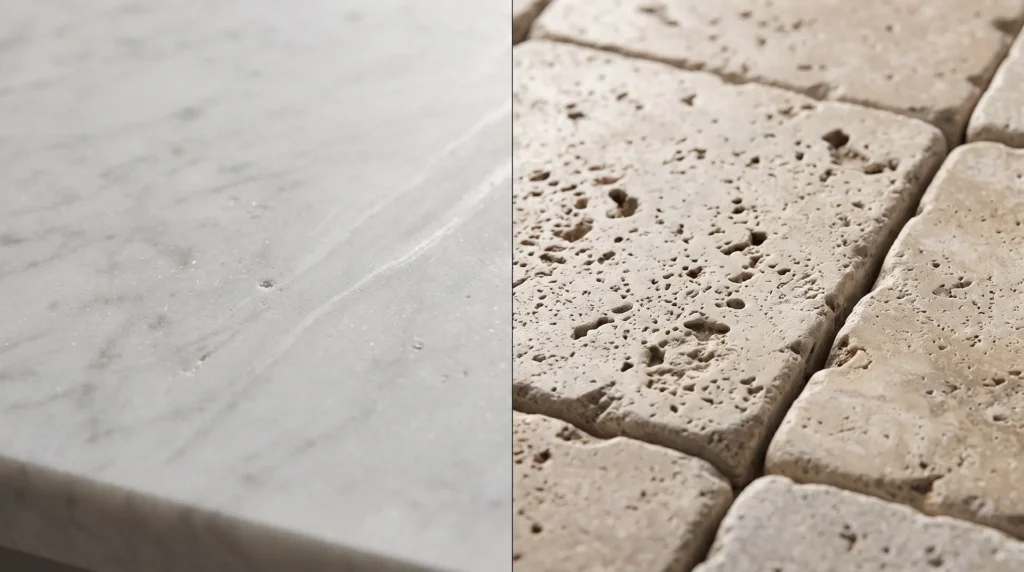
Honed vs. Tumbled Finish: Which Stone Surface Should You Specify? This comparison isn’t about which stone to buy — it’s about what happens to the surface after the stone is already chosen. The same slab of travertine or marble can leave the factory looking completely different depending on how its surface was finished, and honed […]
Category Archives: Stonepedia
The Material Library: Geology, Finishes, and Maintenance.
Natural stone is not just a building material; it is geology frozen in time. From the crystalline structure of Onyx to the sedimentary layers of Limestone, we bridge the gap between geological science and architectural application. Explore our comprehensive guides on lithology, surface finishes, and technical durability
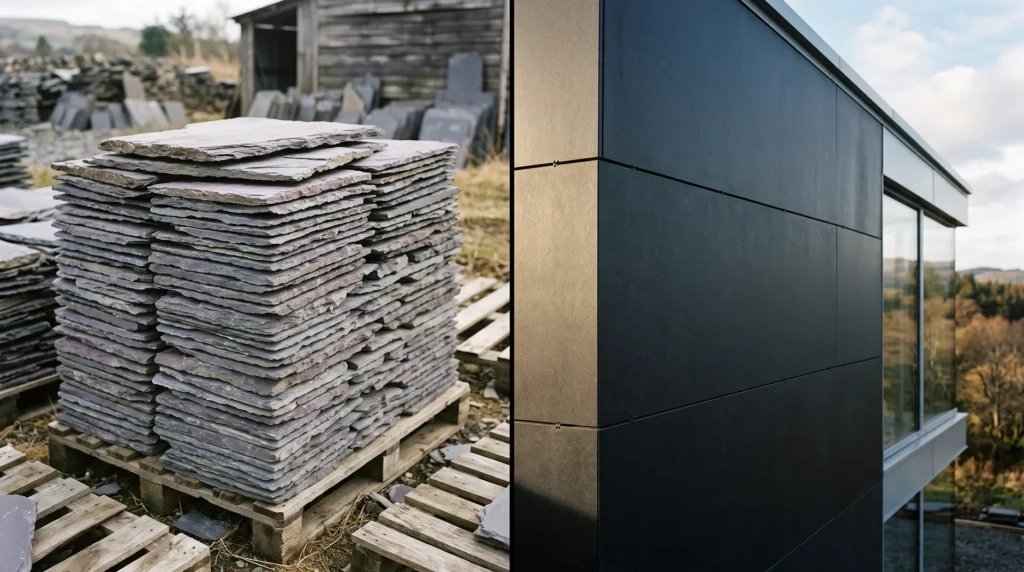
Slate vs. Basalt: Which Dark Stone Wins for Facades and Floors? Both read as dark, moody, architectural stone — and both show up constantly in the same conversations about facades, roofing, and minimalist exteriors. But geologically, they could hardly be more different. Slate is a layered, sedimentary-derived metamorphic rock that wants to split into thin […]

Basalt vs. Granite: Two Hard Stones, Two Different Origins Both are igneous rocks, both are genuinely tough, and both show up constantly in facades, flooring, and outdoor paving — but they cool from magma in completely different ways, and that difference explains almost everything else about them. If you’re choosing between a dark, uniform basalt […]
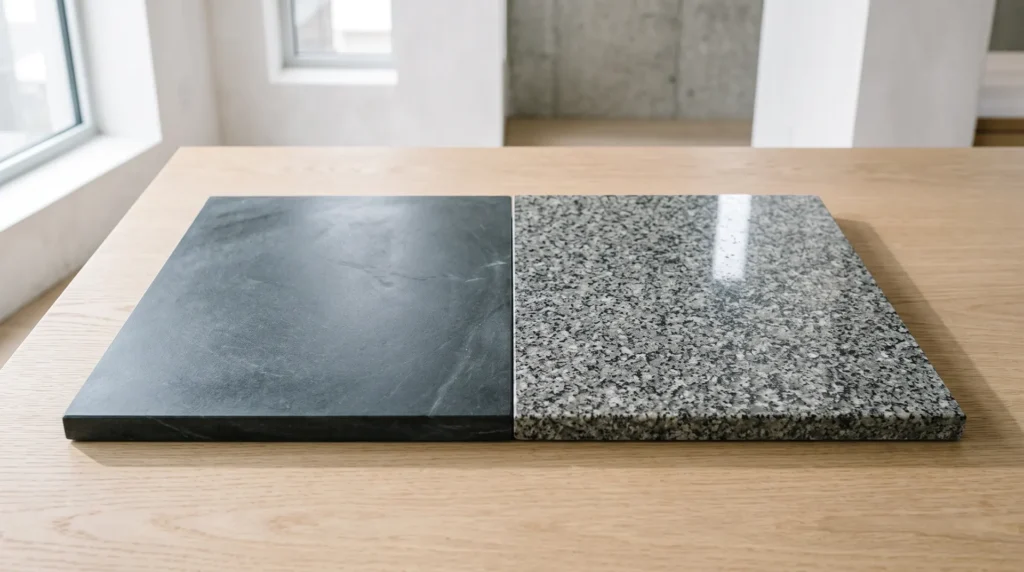
Soapstone vs. Granite: The Soft Stone vs. The Hard Stone These two sit at almost opposite ends of the hardness scale, and yet both are considered among the most forgiving, kitchen-friendly natural stones available — for completely different reasons. Granite survives daily abuse because it’s hard. Soapstone survives daily abuse because it doesn’t care — […]
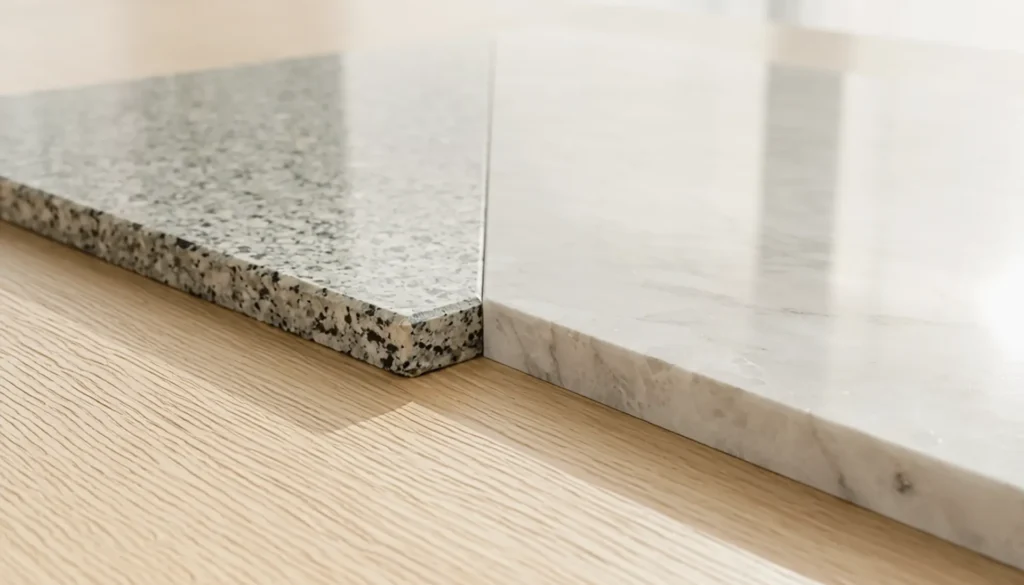
Granite vs. Quartzite: Which Hard Stone Wins for Your Kitchen? Both of these are genuinely tough, genuinely beautiful natural stones — and both get mislabeled constantly, which is exactly why this comparison matters. Granite and quartzite are two of the hardest, most durable materials available for countertops, and unlike the marble comparisons on this site, […]
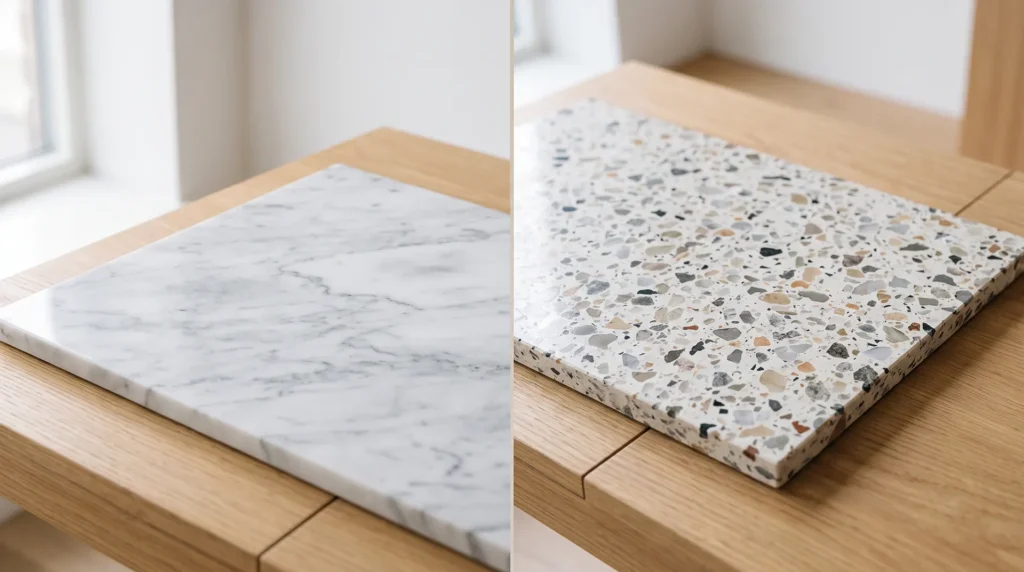
Terrazzo vs. Marble: Which Should You Actually Specify? Here’s the part most comparisons skip: terrazzo is very often made from crushed marble. So this isn’t quite a contest between two unrelated materials — it’s a comparison between marble in its natural slab form and marble (often mixed with granite, quartz, or glass) suspended in a […]
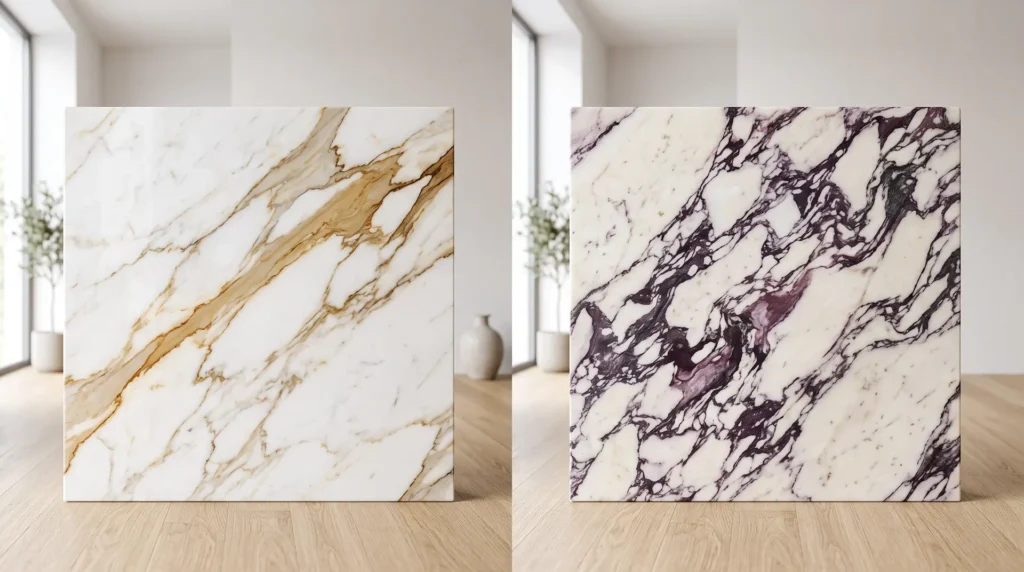
Calacatta Gold vs. Calacatta Viola: Comparing Two Rare Calacatta Varieties Once you move past standard Calacatta, the naming gets specific fast — and two of the most sought-after variants couldn’t look more different from each other. Calacatta Gold and Calacatta Viola share the same base marble family, but the vein color that runs through each […]
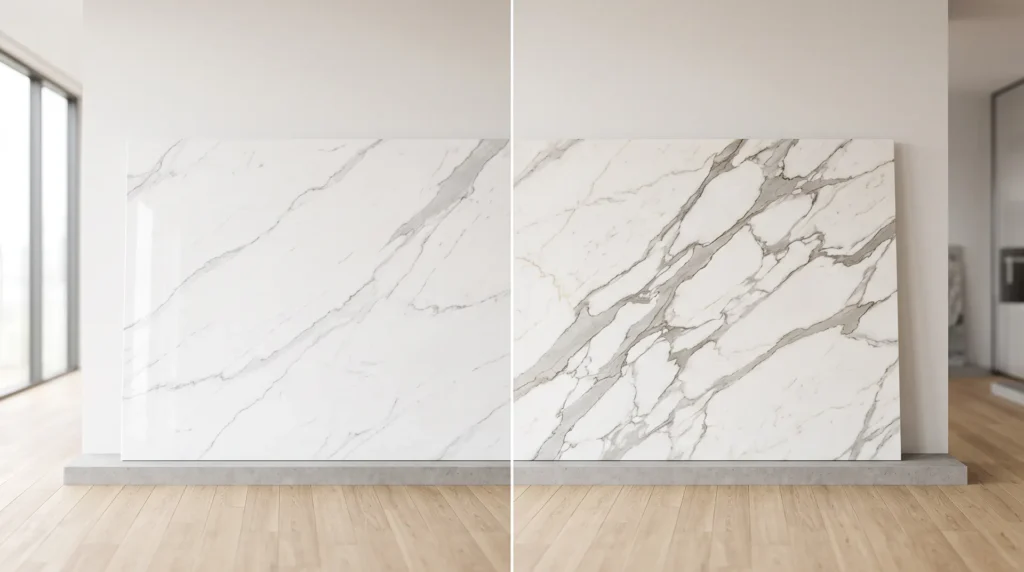
Statuario vs. Calacatta: The Two Most Prestigious White Marbles Compared These are the two marbles that sit at the very top of the price ladder — and the two that get confused for each other most often, even by people who work with stone every day. Both are quarried from the same corner of Tuscany. […]
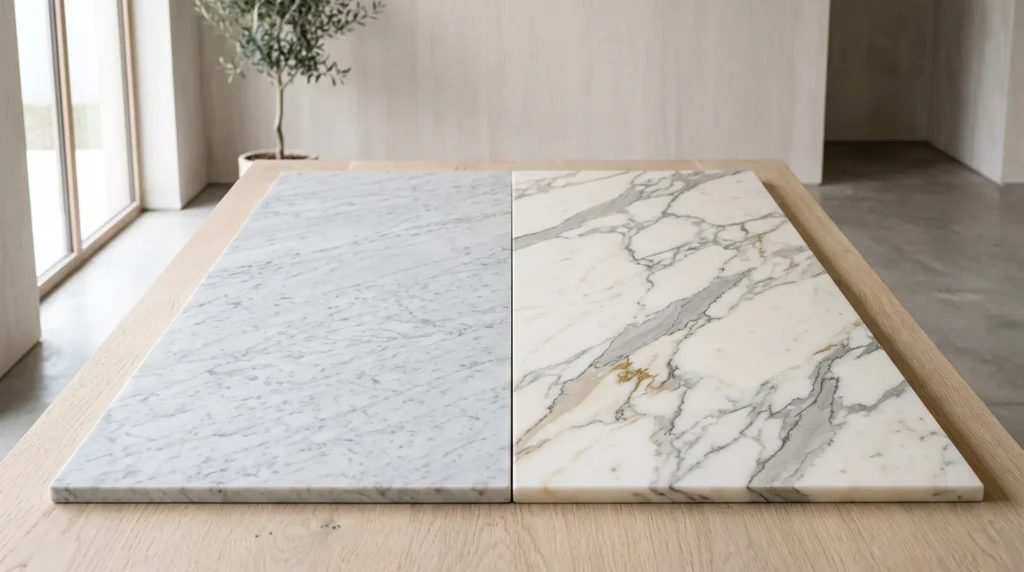
Calacatta vs. Carrara Marble: The Definitive Comparison They come from the same mountains, sometimes the same quarry district, and salespeople confuse them constantly — but Calacatta and Carrara are not the same marble, and the price gap between them can be three to four times per square foot. If you have ever been quoted “Calacatta” […]
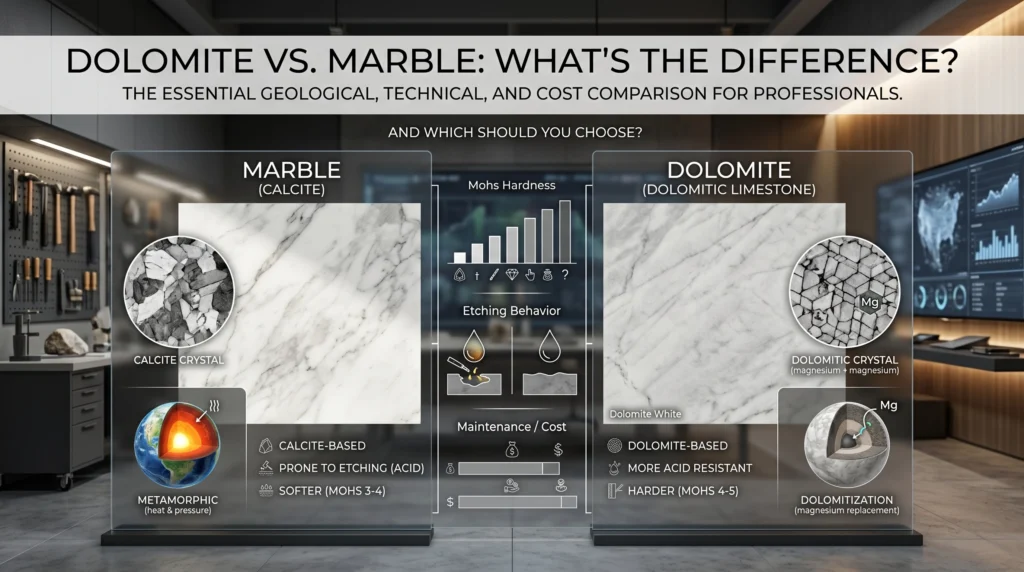
Dolomite vs. Marble: What’s the Difference — and Which Should You Choose? Walk into most stone showrooms and you will find dolomite slabs sitting next to marble, labeled similarly, priced comparably, and looking nearly identical. Yet these two stones have different geological origins, different performance profiles, and different long-term behaviors. Confusing them — or choosing […]