The Seamless Outdoors: A Guide to Natural Stone Pavers & Pool Coping
Introduction: The Death of the Concrete Paver “For too long, the outdoor space was an afterthought. Homeowners spent thousands on marble interiors, only to step outside onto cheap, stamped concrete pavers or plastic composite decking.
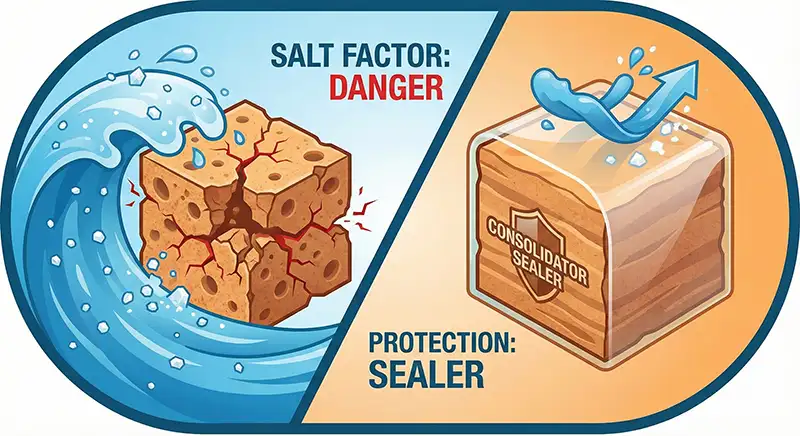
Real luxury is seamless. It is opening your sliding glass doors and seeing the same beautiful natural stone flow from your living room to the edge of your pool. But the outdoors is a harsh environment. UV rays, salt water, and freezing temperatures require a stone that is not just beautiful, but a warrior. Here is how to pave your sanctuary.”
1. The “Hot Feet” Test (Travertine vs. Granite)
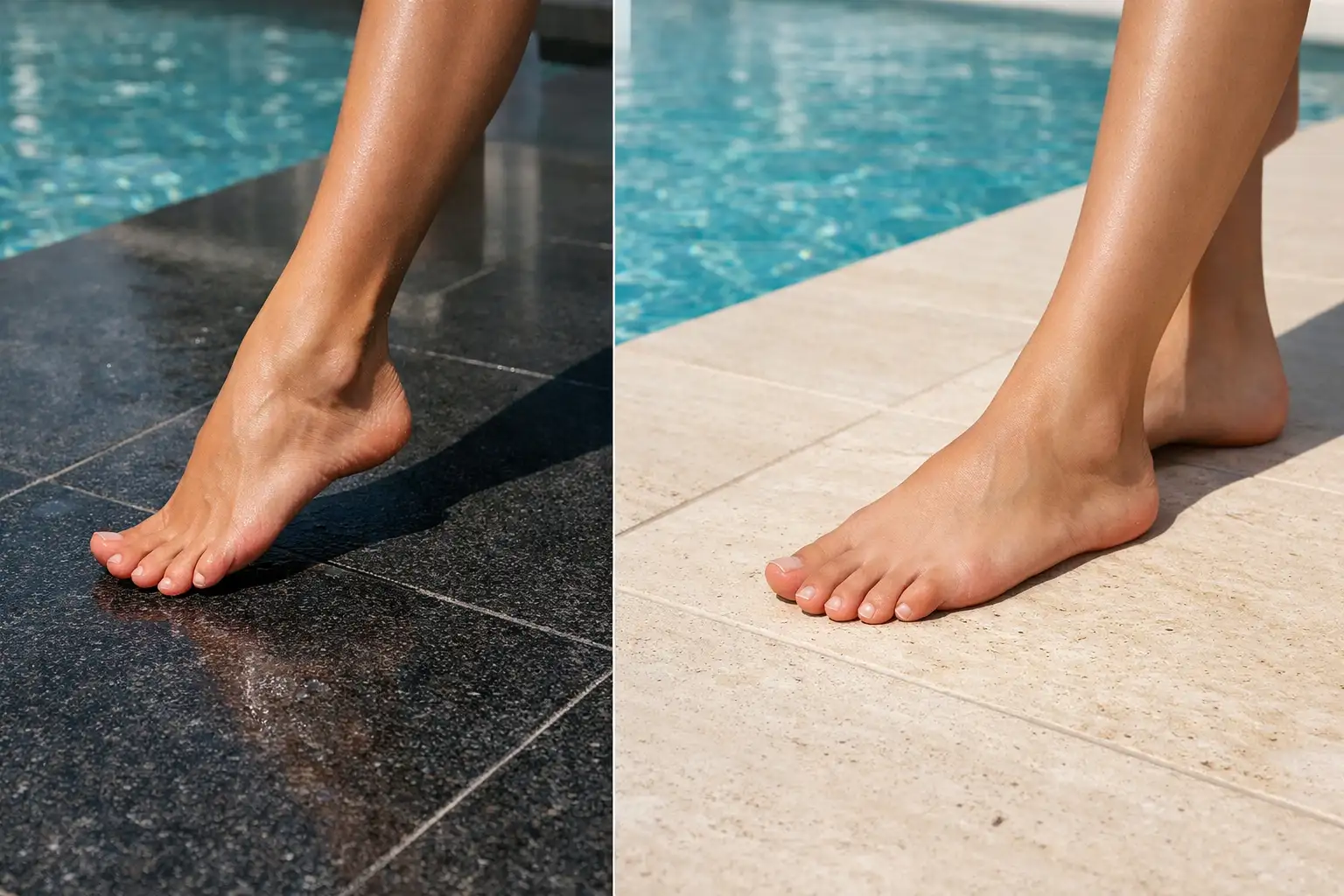
The biggest mistake homeowners make is choosing a stone based on color alone. You must consider Thermal Inertia.
-
The Science: Dark, dense stones (like Black Granite or Basalt) absorb heat. In direct summer sun, they can reach 60°C+ and burn your feet.
-
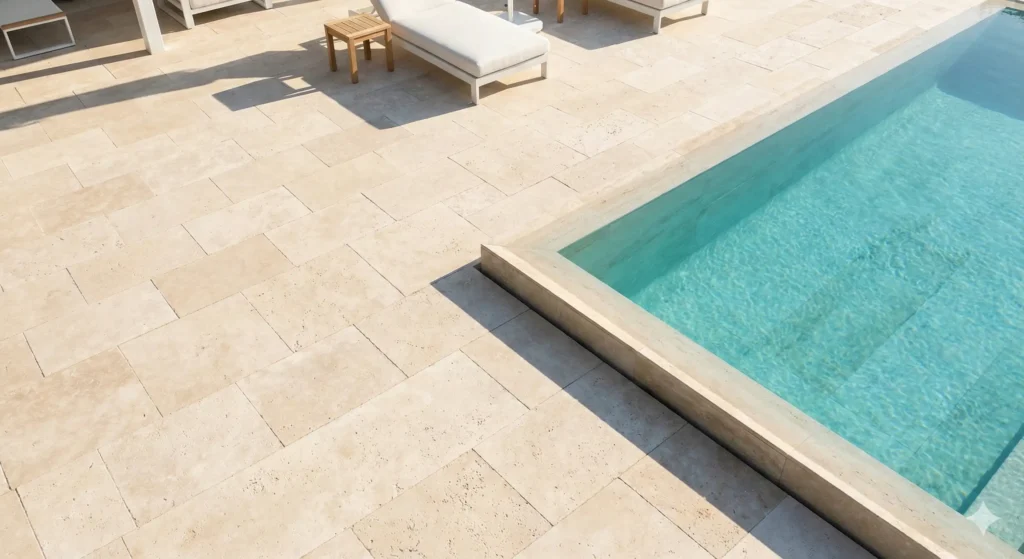
The Solution: Travertine and light Limestone. Their porous structure allows heat to escape. They stay cool to the touch even in the scorching sun, making them the undisputed kings of the pool deck.
2. Safety First: The Texture Factor
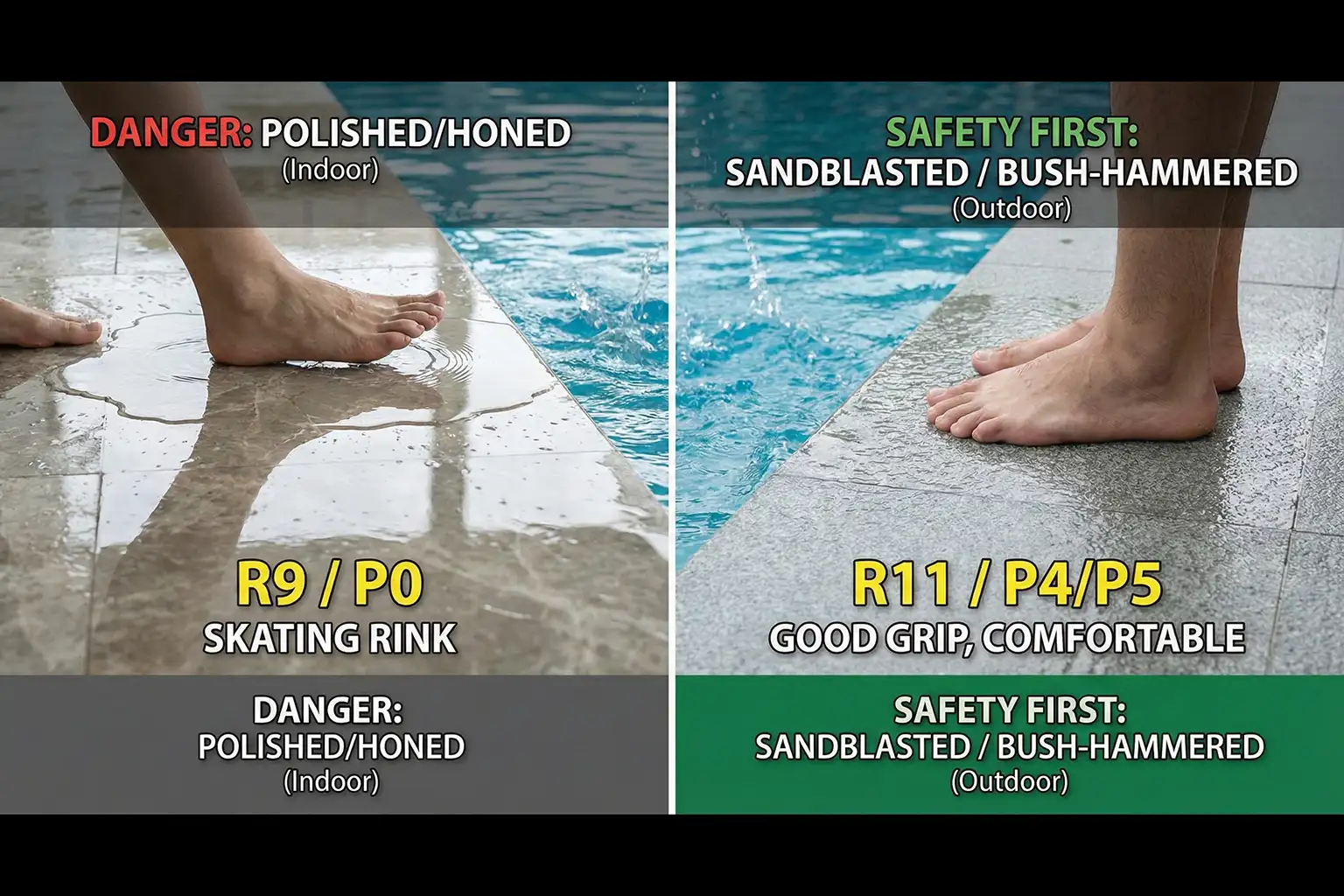
Indoor finishes (Polished/Honed) are dangerous outdoors. One splash of pool water turns them into a skating rink.
-
What to Specify: Look for Sandblasted, Bush-Hammered, or Tumbled finishes.
-
The Metric: Ask your supplier for an R11 or P4/P5 slip rating. You want grip, but not so rough that it hurts bare feet.
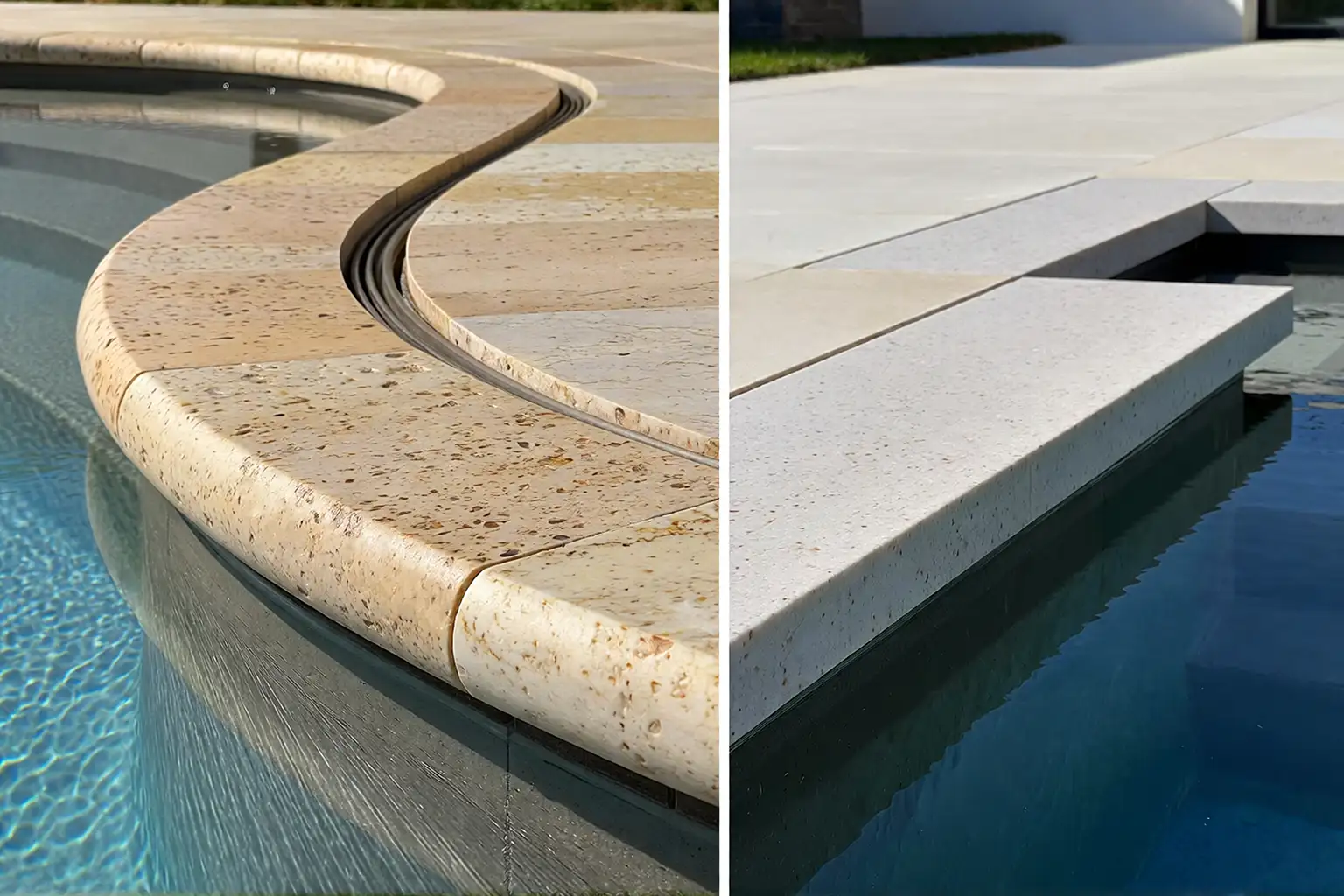
3. Pool Coping: The “Frame” of the Art
Coping is the capstone that sits on the edge of the pool shell. It defines the style.
-
The Old School: Bullnose (Rounded edge). It’s traditional, safe for kids, but looks dated.
-
The Modern Choice: Drop Face (Rebated) Edge. This is an L-shaped piece that drops down over the waterline. It makes the stone look like a thick, solid block. It is clean, architectural, and monolithic.

4. The Contender: Quartzite Pavers
If you want the look of marble outdoors but need extreme durability, Quartzite is the answer.
-
Why: Unlike marble, it won’t etch from acidic rain or pool chemicals. It is harder than steel.
-
Design Note: Use a “Split-Face” or “Flamed” finish for a rugged, organic texture that sparkles in the sunlight.
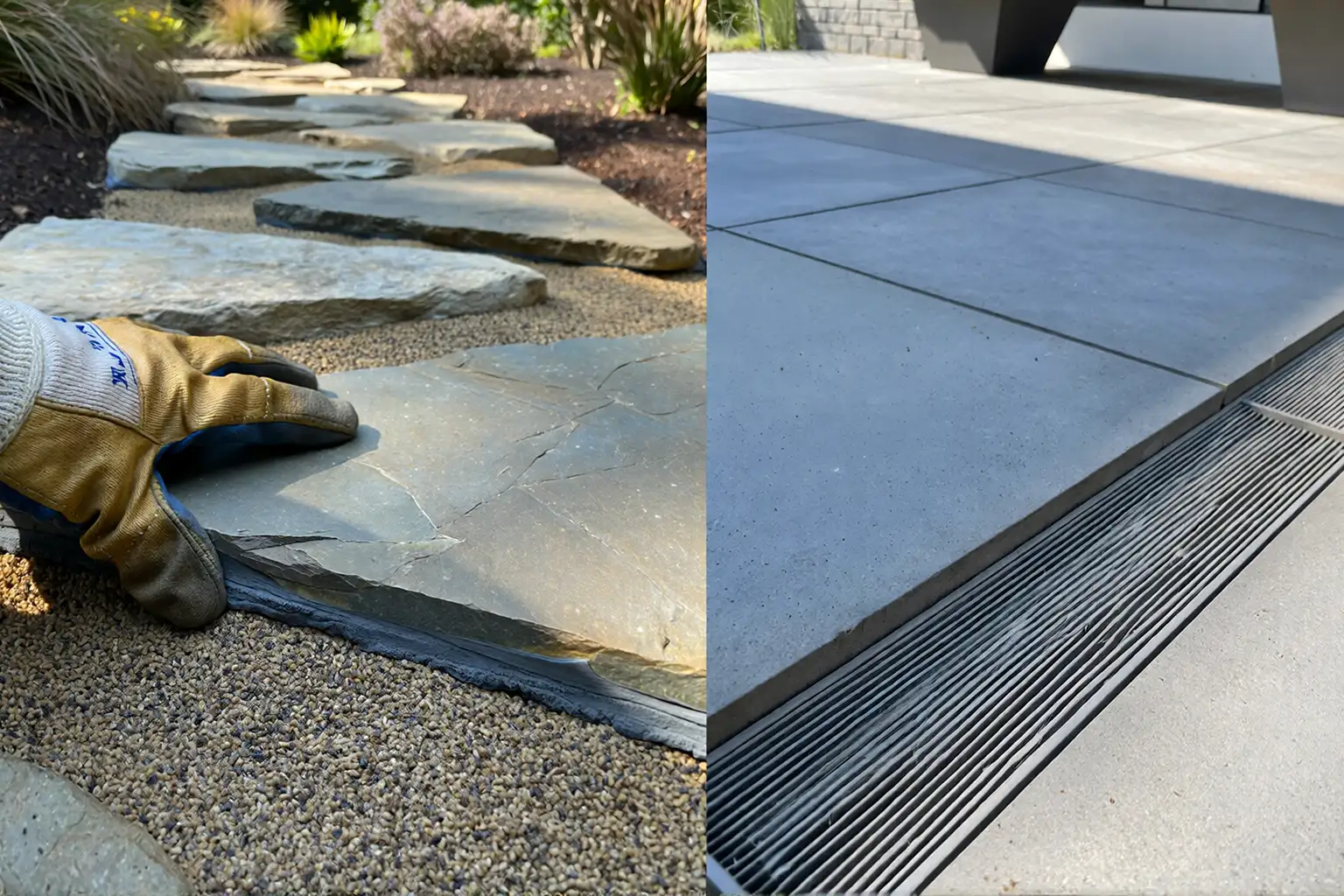
5. Installation: Sand vs. Slab
-
Dry Lay (Sand Set): Flexible. If the ground moves or a tree root grows, you can lift the stone and fix it. Best for freeze/thaw climates.
-
Wet Lay (Mortar): Permanent. Feels more solid and luxurious, but requires a concrete slab foundation. Essential for large-format tiles (e.g., 100x100cm).