
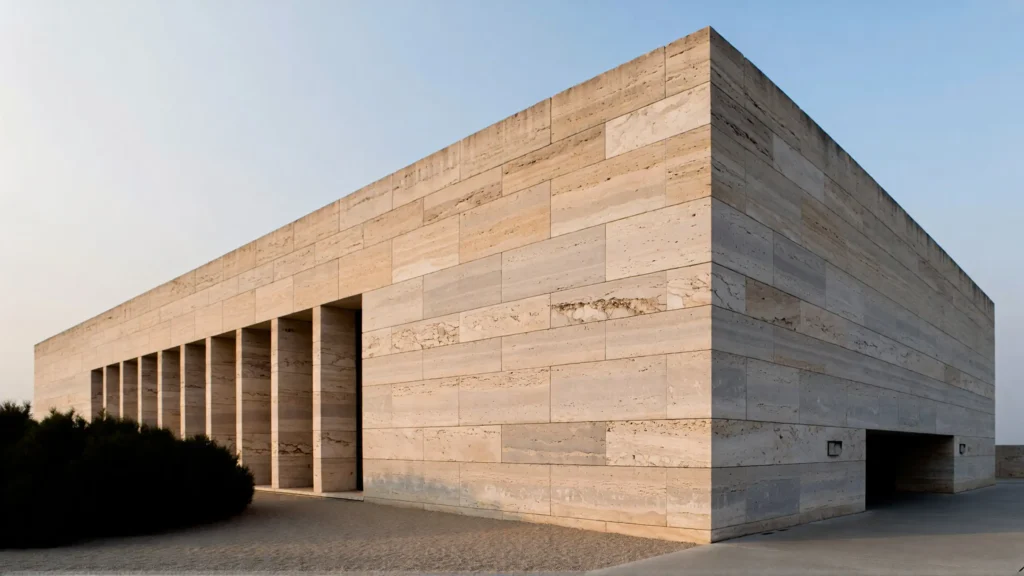
In minimalist architecture, there is nowhere to hide. Without ornamentation, the material itself must tell the story. Limestone and Travertine are not just surface coverings; they are the skin of the building. They breathe, age, and interact with the sun. Here is why natural stone remains the ultimate choice for minimalist exteriors.
The Monolithic Scale
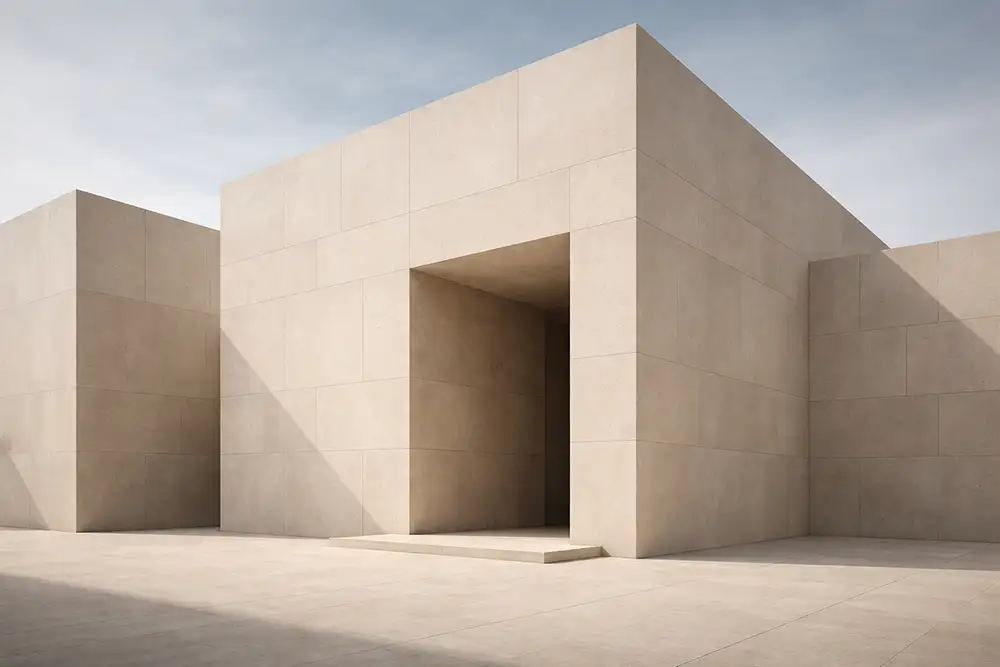
Minimalism demands scale. Using large-format limestone slabs reduces the visual noise of grout lines, creating the illusion that the building was carved from a single block of rock. It grounds the structure, giving it a sense of permanence and weight that synthetic materials cannot mimic.
Patina: Aging as an Aesthetic
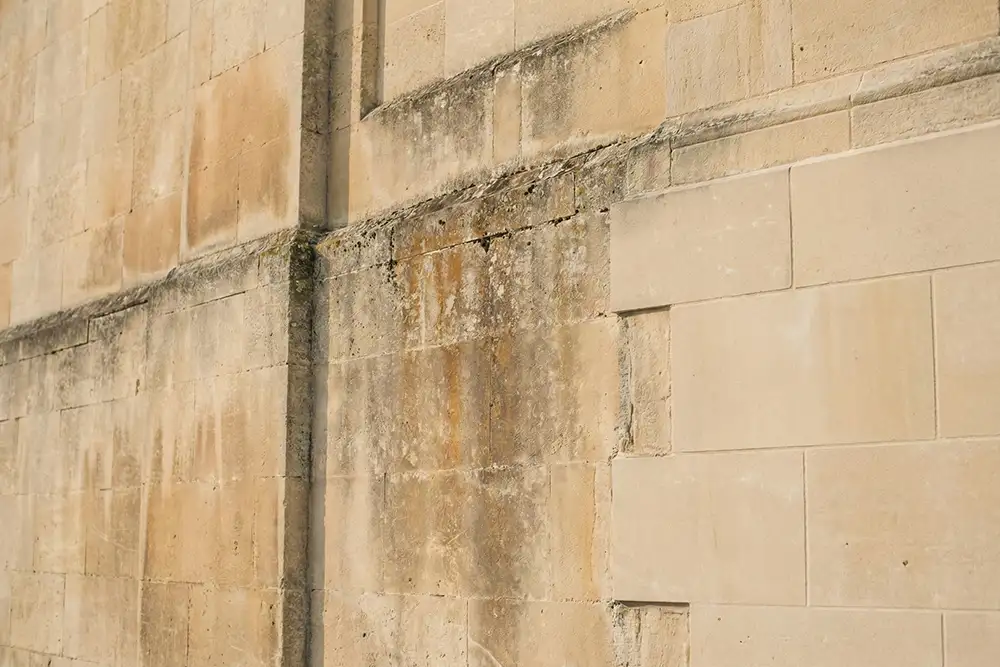
Unlike concrete which can look dirty over time, or metal which creates streak marks, high-quality limestone develops a patina. It oxidizes and weathers gracefully, recording the passage of time. A limestone facade designed today will look even more distinguished in twenty years.
Texture Over Color
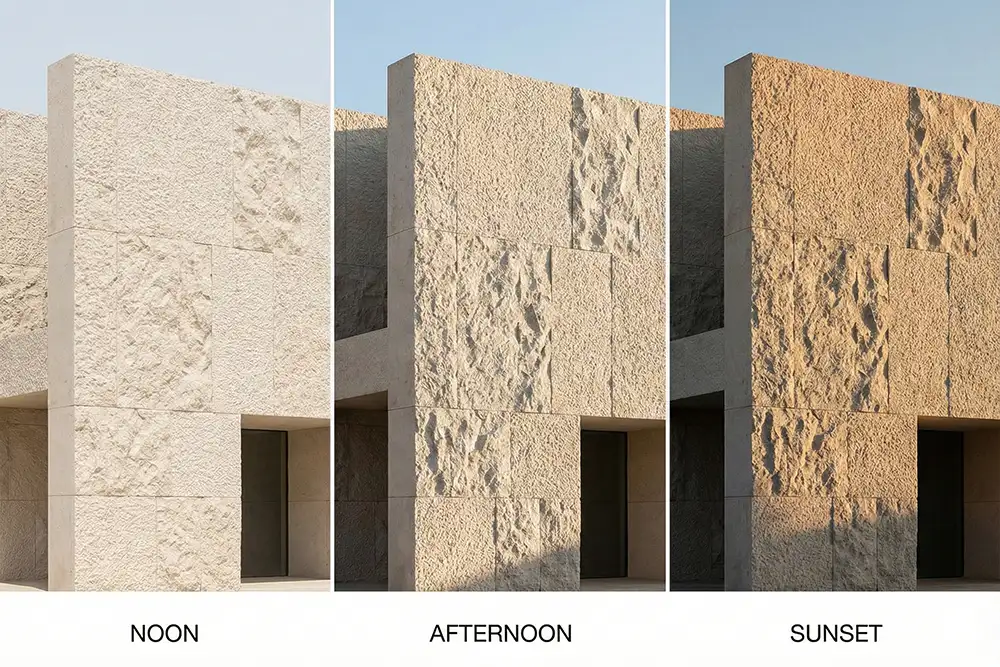
In a minimalist facade, the play of light is everything. Textured finishes like bush-hammered, sandblasted, or split-face catch the sunlight differently throughout the day. As the sun moves, the building’s expression changes—from flat and soft at noon to deeply textured and dramatic at sunset.
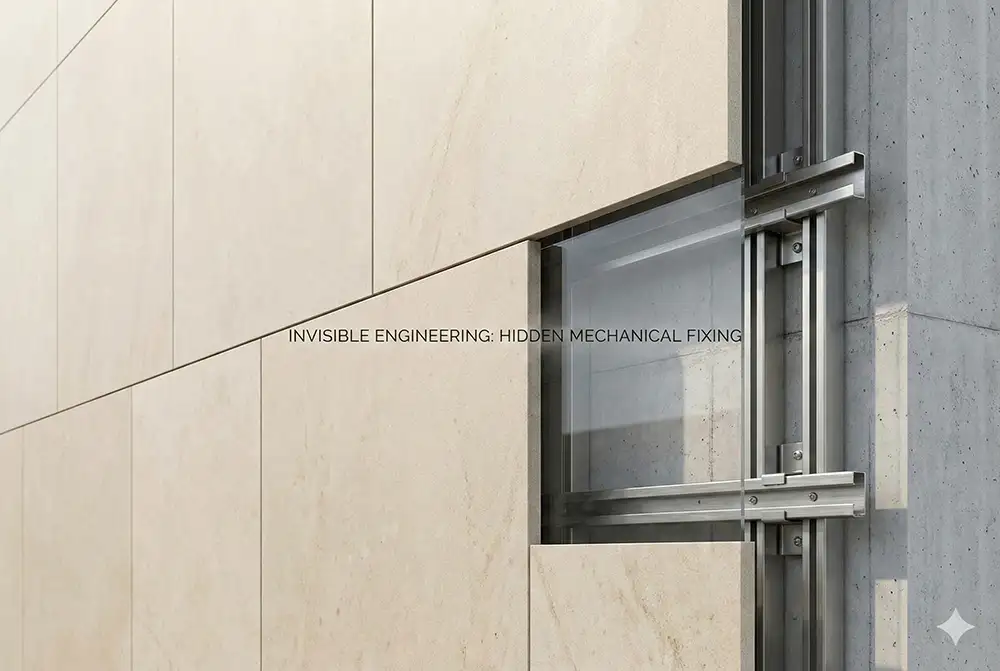
Invisible Engineering
rue minimalism requires precision. Modern mechanical fixing systems allow for hidden anchors, enabling the stone to hang securely without visible bolts or clips. This “floating” appearance reinforces the clean lines essential to the style.
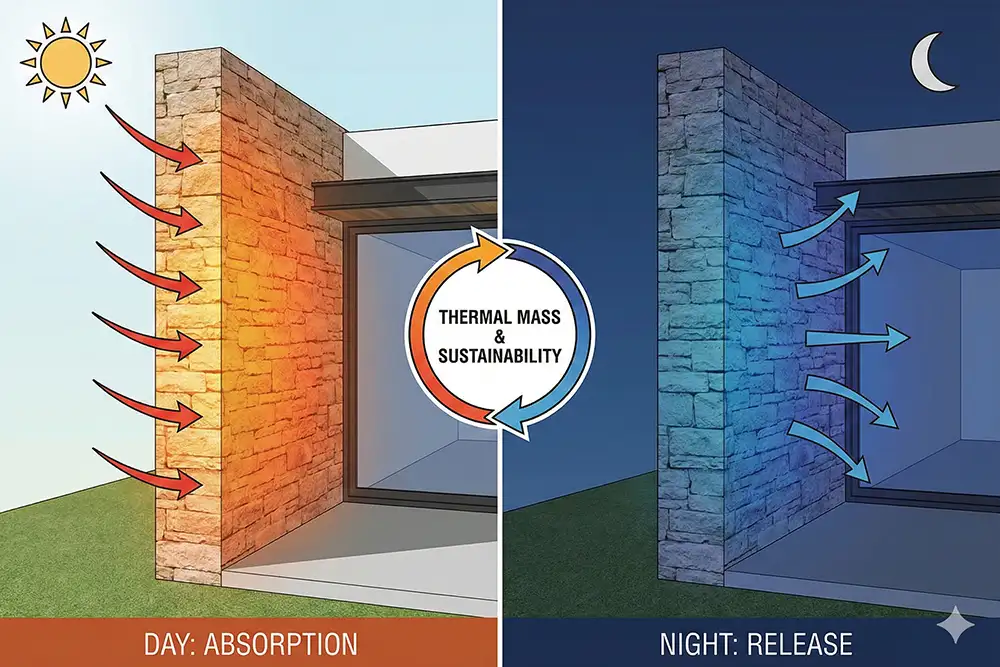
Thermal Mass & Sustainability
Beyond aesthetics, thick stone cladding acts as a thermal mass, absorbing heat during the day and releasing it slowly at night. It is a passive design strategy that aligns perfectly with the modern need for sustainable, energy-efficient architecture.
A facade is the first conversation a building has with its environment. To understand the technical nuances of limestone cladding and receive global quarry reports, join our exclusive community.