
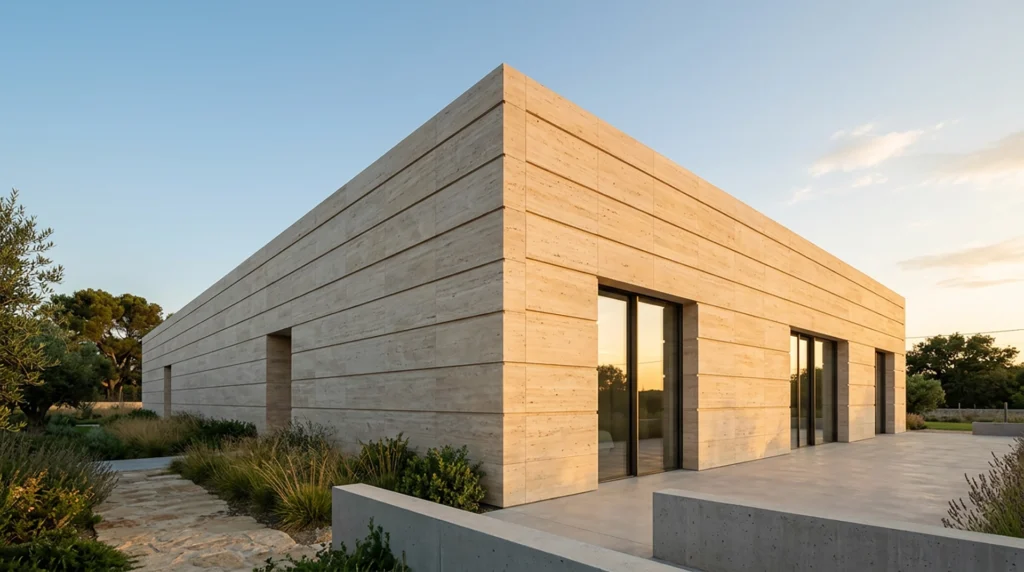
Minimalist Facades: The Warm Authority of Travertine
Minimalist architecture strips away ornament, so the material has to carry the entire building. Travertine does this differently from the cold, dark stones: it brings warmth, a strong horizontal rhythm, and a surface literally shaped by water. Here is why this hot-spring stone keeps returning to the facades of architects who want calm instead of drama.
The Horizontal Grain
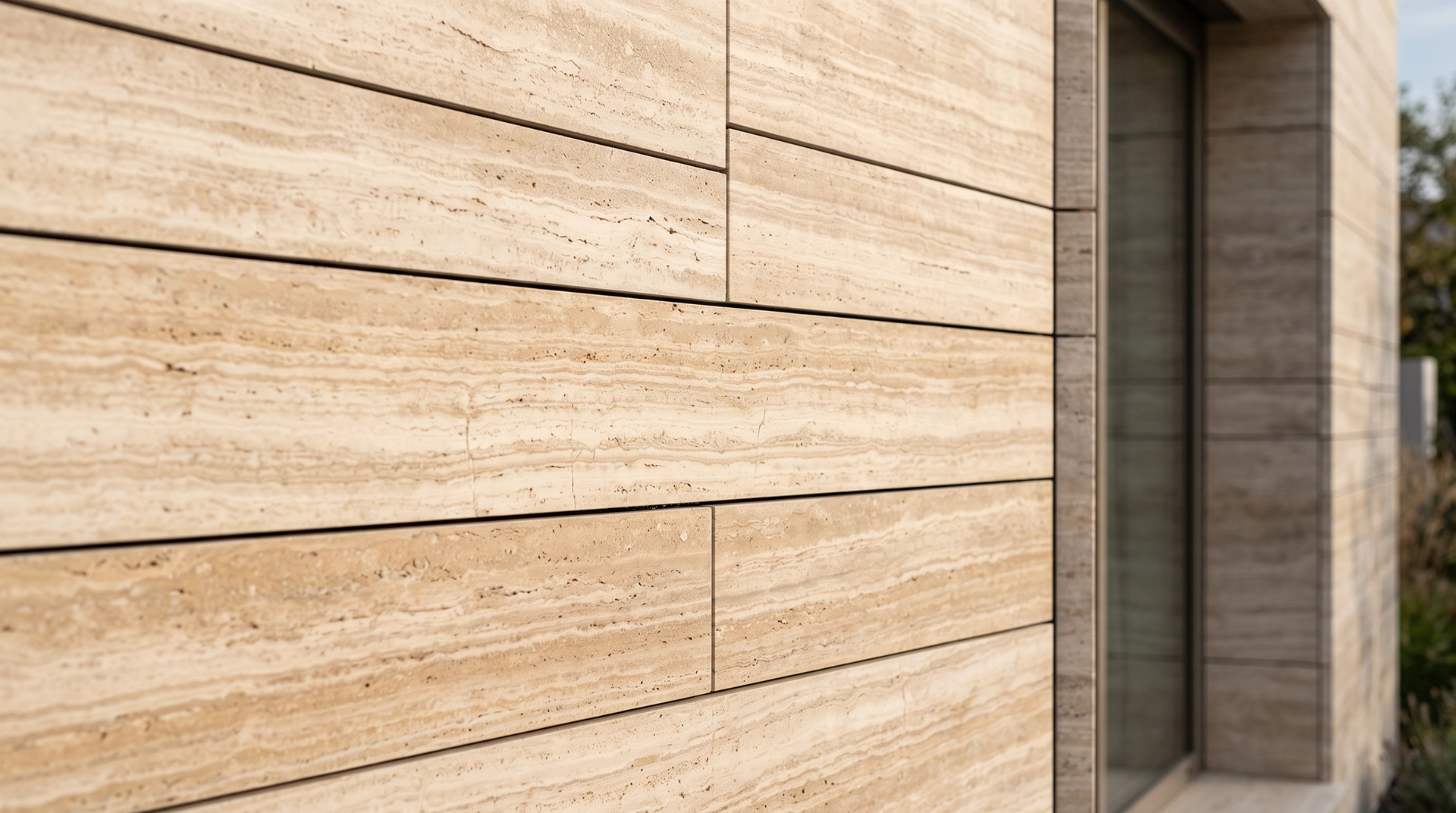
Travertine forms as mineral-rich water deposits calcium carbonate in thin layers, and those layers read as long, quiet bands across every panel. Cut along the bedding (vein cut), the stone shows continuous linear stripes; cut across it (cross cut), the pattern turns soft and cloudy. On a facade, vein-cut panels laid horizontally emphasize the building’s length and give a minimalist volume a rhythm without adding a single decorative element.
Color as Warmth
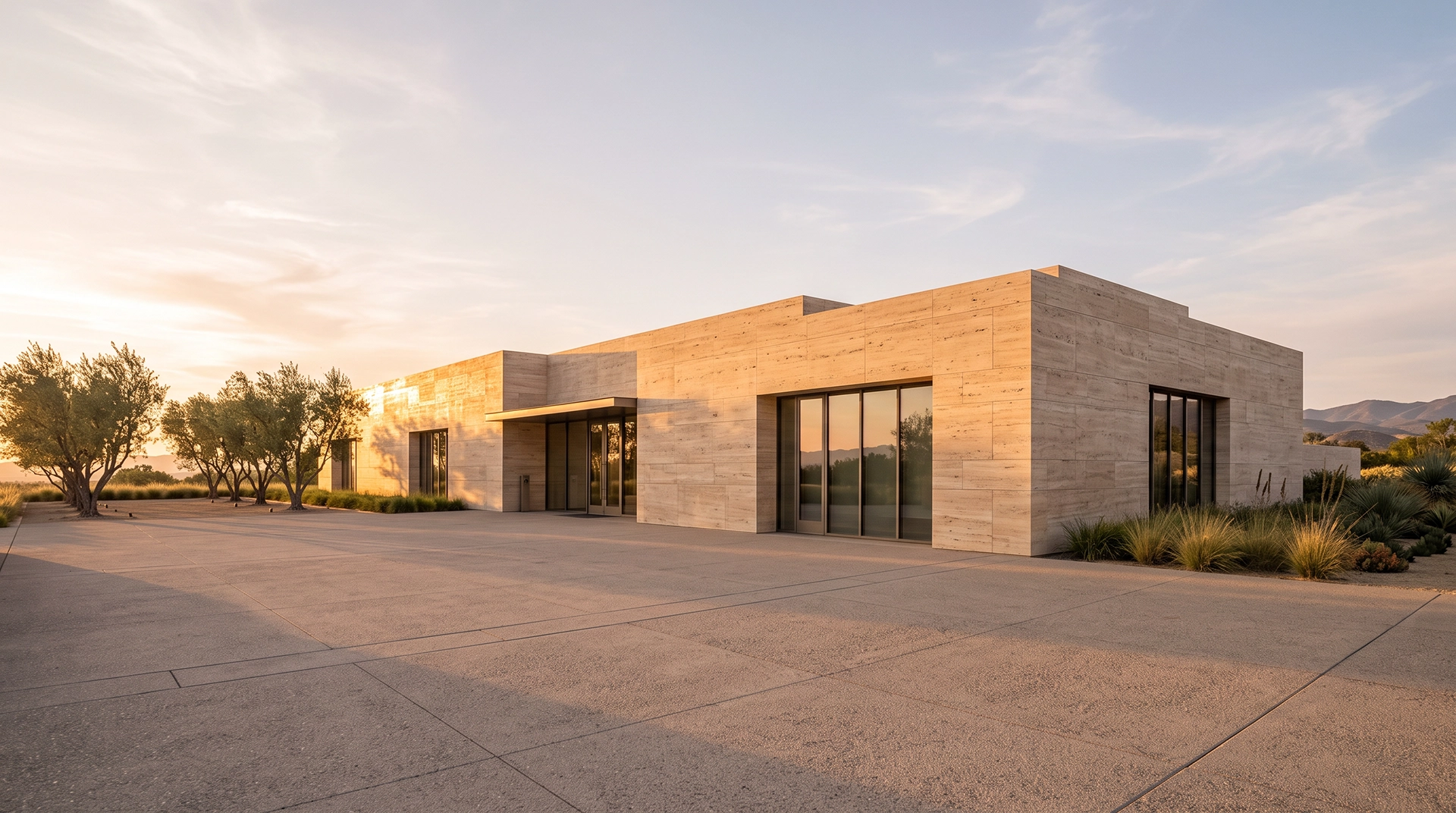
Where basalt swallows light, travertine returns it. Its palette runs from pale ivory through honey and sand to deep walnut, and lighter tones reflect far more sunlight than dark cladding does. At golden hour a travertine wall appears to glow from within, which is why it suits buildings meant to feel welcoming rather than monumental.
Texture That Holds the Light
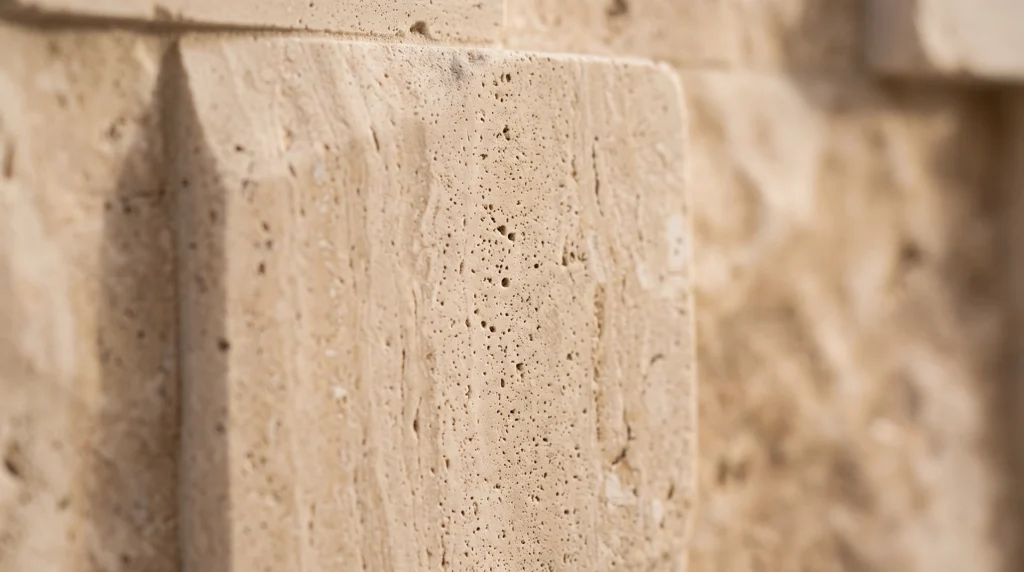
Natural pores and voids are travertine’s signature, and on an exterior they are also its main risk. Facade-grade travertine is normally filled and then honed or brushed: the fill keeps water out of the voids, while the matte surface keeps the stone’s soft shadow play. Unfilled material looks more rustic but absorbs more moisture, so in freeze-thaw climates ask your supplier for tested absorption and freeze-thaw data before specifying.
Invisible Engineering
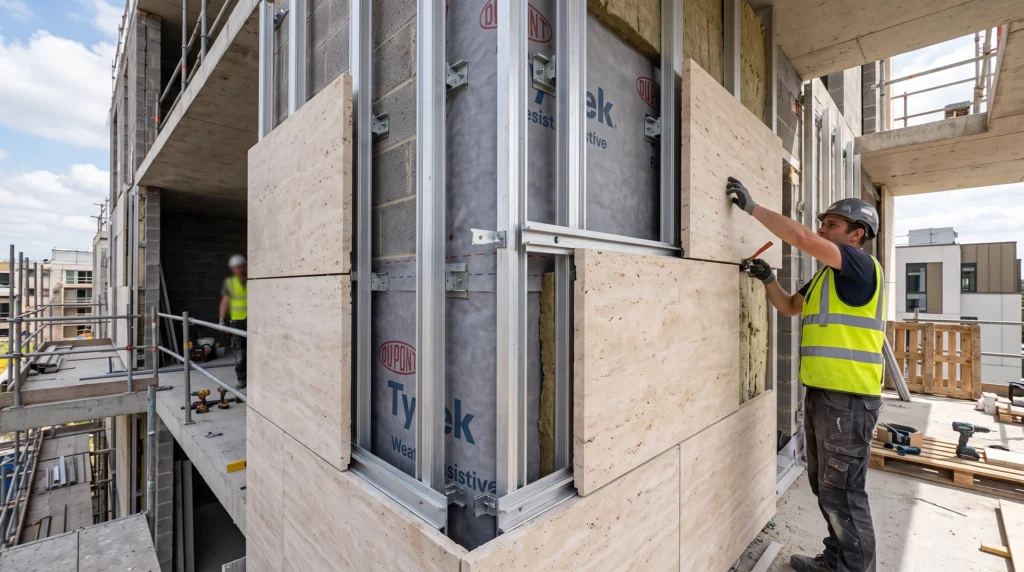
Travertine is softer than granite or basalt (roughly Mohs 3–4), so panel thickness, anchor placement, and edge detailing matter more than they do with harder stones. Modern ventilated rainscreen systems with hidden anchors let large panels hang without visible fixings, while the air cavity behind them lets moisture escape instead of sitting against the stone.
Mass, Heritage & Longevity
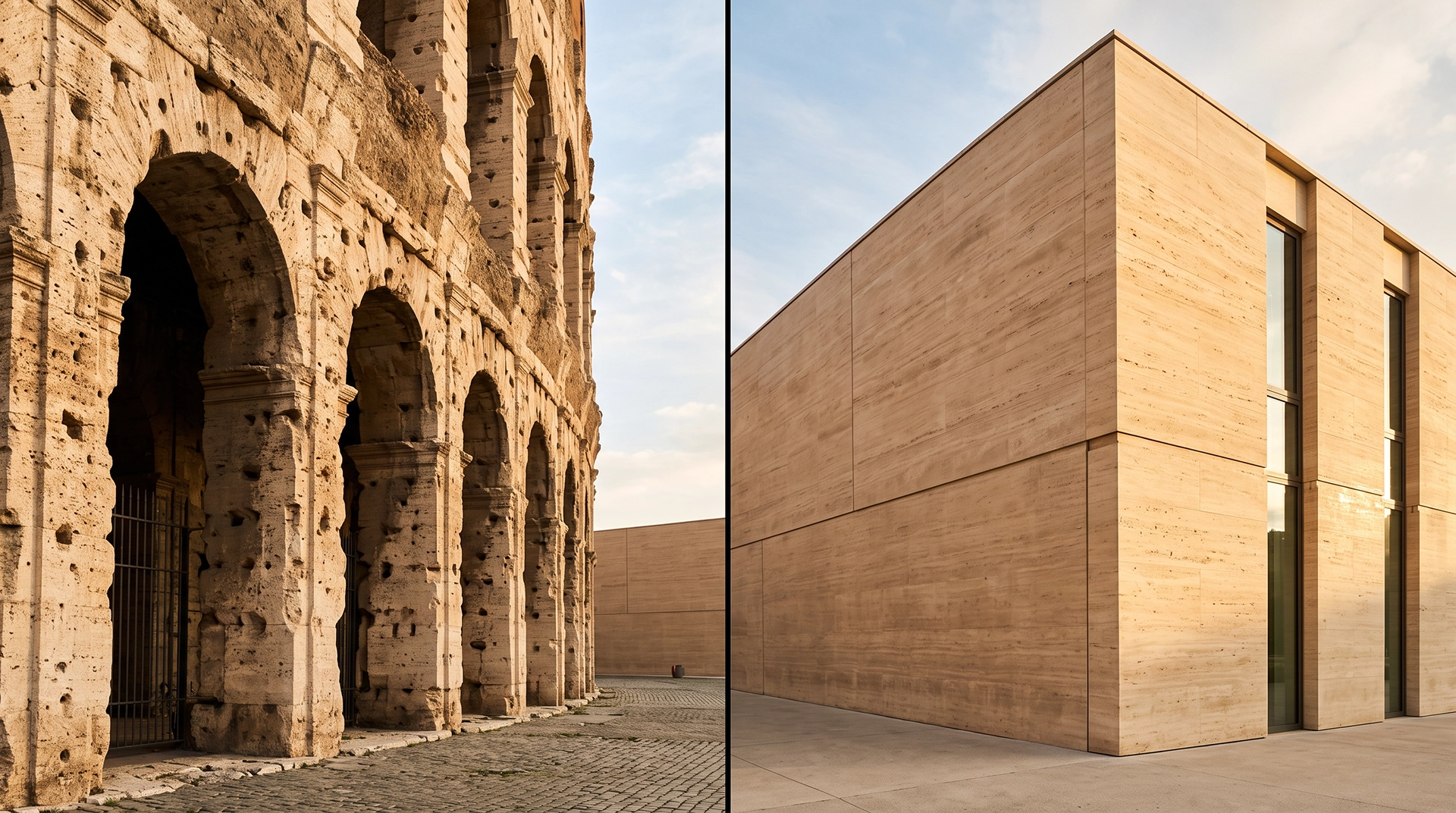
Travertine has been cladding and building monumental architecture since Roman times, the Colosseum being the best-known example, and the track record is hard to argue with. Its mass moderates temperature swings, and its light tone reduces solar heat gain compared with darker stones. Specified correctly, filled, tested, and properly anchored, it ages by softening rather than failing.
A facade is the first conversation a building has with its environment. To understand the technical nuances of travertine cladding and receive global quarry reports, join our exclusive community.